


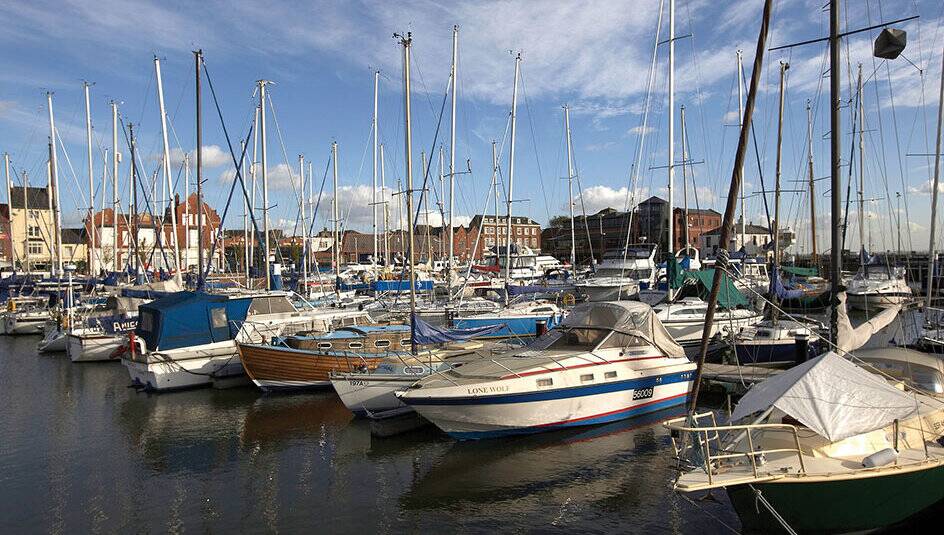
As marinas across the UK adapt to shifting customer expectations and rising environmental standards, two themes are becoming increasingly critical to long-term success: safety and sustainability. Whether it’s through smarter infrastructure, tighter operational practices, or customer education, the most forward-thinking marina operators are rethinking how to future-proof their sites—while still delivering a first-class customer experience.
To better understand how these priorities are shaping the industry, we spoke with Neill Walker, our Business Development Manager. With over a decade of operational and development experience in the industry, Neill offers a first-hand, practical perspective on what’s changing—and what’s to come.
Making Safety a Daily Priority
In Neill’s view, safety is “non-negotiable” and must be embedded in daily operations. The most common marina incidents are often deceptively simple: slips, trips, and falls, usually involving poorly managed cables or worn pontoons.
“I’ve seen people who have tripped over their electrical cables trying to get on the back of their boats,” Neill recalled. “They’ve slid down between the boat and the pontoon and caused themselves serious injury.”
At the operational level, the foundation of a safe marina is a well-trained, proactive team. “You need an operations team that walks the marina, identifies problems, and has a system in place to record and respond,” he explained. That includes everything from spotting raised boards to dealing with wet floors in toilet blocks.
Documentation and training are equally important—not just to manage safety, but to demonstrate compliance and protect operators from liability in an increasingly litigious environment.
Larger marina groups tend to lead by example, embedding safety into their organisational culture as a core operational priority. For these operators, maintaining a safe, well-managed environment is not just a compliance exercise—it directly supports the overall customer experience and contributes to commercial performance.
Sustainability Matters More Now Than Ever Before
Environmental concerns are no longer optional—they are fundamental to the viability of marina businesses. “Without good quality water, we don’t have a business,” Neill said. “It’s as simple as that.”
Sustainability today goes far beyond recycling bins. Operators are being evaluated on their impact on local ecosystems, their waste and pollution controls, and their education of berth holders.
“Too often, people think pouring washing-up liquid on a fuel spill fixes the problem,” Neill said. “It doesn’t—it just hides it. Education is vital.”
The Clean Marina Scheme by The Yacht Harbour Association is already driving change, encouraging more operators to raise environmental standards across everything from water quality to waste management.
Some operators are also embracing new infrastructure—such as recyclable pontoon floats that replace traditional polystyrene blocks, which often end up in landfill. “It’s a game-changer,” Neill said. “The material is stronger than carbon fibre and 100% recyclable. But the will to adopt it needs to be there.”
The Role of Innovation and Investment
One of the most significant shifts Neill has observed is the entry of private equity into the marina sector. “They’re demanding more—more data, more clarity, more performance,” he explained. “It’s not enough to say the spreadsheet looks right. They want to know where their revenue is coming from, and how to grow it.”
That level of scrutiny is pushing marinas to adopt digital solutions, from operations management systems to customer communication apps. These tools support better decision-making and enable safer, more efficient day-to-day operations—especially in larger or multi-site groups.
Technology is also transforming day-to-day tasks across all levels of marina operations. For example forklift drivers now rely on fully digitised systems to guide their work. “The operator of a forklift has got everything digitised on a screen on his forklift,” Neill explained. “So he knows which boat to take out and which boat is being launched next, which boat’s being retrieved next.” It’s a clear example of how digital tools are becoming embedded in every aspect of marina management, supporting greater efficiency, accuracy, and safety on the ground.
Looking Ahead
As the marina industry continues to evolve, the twin priorities of safety and sustainability will only grow in importance. Operators who embed these principles into their day-to-day operations—from preventative maintenance and staff training to eco-friendly infrastructure and berth holder education—are not only meeting current expectations but actively shaping the future of the sector.
The next decade will likely bring further consolidation, rising regulatory pressures, and more demanding customers. But it also presents opportunities: for innovation through digital technology, for stronger collaboration across the industry, and for bold steps towards environmental leadership.
Marinas that invest now in smarter systems, sustainable practices, and a culture of continuous improvement will be best placed to thrive—offering not just a safe place to moor, but a modern, forward-looking destination that boaters want to return to again and again.