


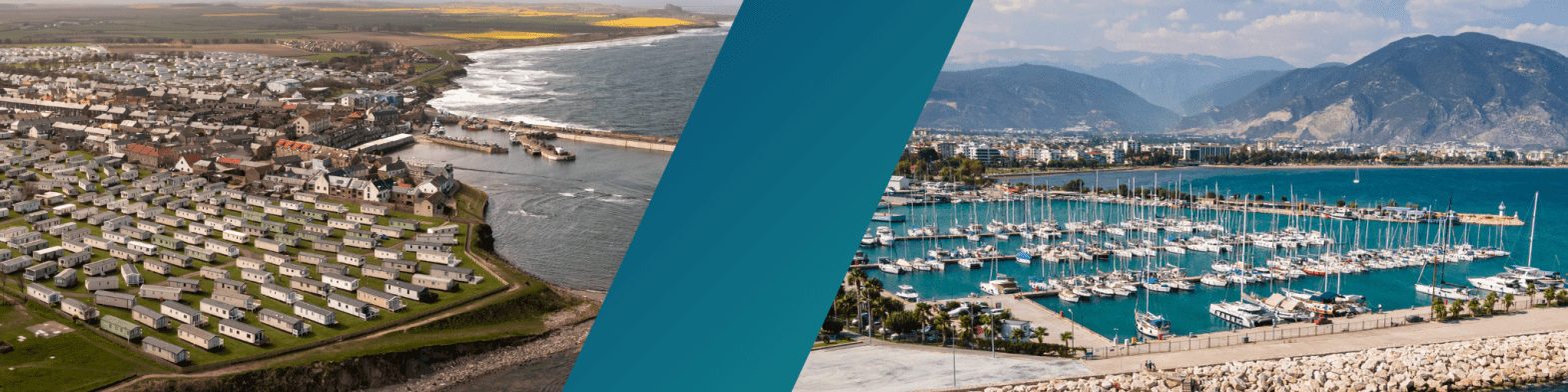
Anyone running a park or marina is under some version of the same pressure: how do we increase revenue in holiday parks or increase revenue in marinas without pushing pricing too far?
The conversation often moves quickly towards growth in the visible sense. More units. More berths. More marketing. Sometimes that is absolutely the right move, but in many operations, revenue does not weaken because the strategy is wrong. It softens because the detail is inconsistent.
If you were to pause for a moment and ask yourself a few practical questions, what would the honest answers look like? Have any of your enquiries sat unanswered a little longer than they should? Did every advisor consistently offer relevant, natural add-ons? Are returning customers recognised, or treated like first-time visitors? Is making a payment straightforward for all of your customers?
None of these issues, in isolation, feel especially dramatic. You might even dismiss them as inevitable. After all, no operation runs perfectly all of the time. Over time, however, these small gaps influence margin and stability. Improving holiday park revenue growth or strengthening marina revenue management often begins with tightening these everyday moments.
In a recent episode of From Pitch to Pontoon, this quieter erosion was described as “leaky revenue” not lost through poor ambition, but through small operational gaps.
Watch the full episode of From Pitch to Pontoon above to hear the complete conversation.
Key Takeaways
If you are reviewing how to increase revenue in holiday parks or improve marina revenue management, start with:
-
Enquiry handling – Faster, more relevant responses improve conversion without increasing marketing spend.
-
Secondary spend – Structured presentation of add-ons lifts average booking and berth value.
-
Retention and recognition – Repeat revenue is usually more predictable and more profitable.
-
Internal alignment – Clear handovers between teams protect relationships and reputation.
-
Payment simplicity – Reducing friction strengthens cash flow and reduces avoidable tension.
Each of these areas has a direct commercial impact.
How Enquiry Handling Helps Increase Revenue in Holiday Parks and Marinas
Customers rarely contact just one operator. Families comparing holiday parks have usually reviewed accommodation types, facilities and pricing before they submit an enquiry. Boaters exploring a marina have typically assessed location, access and services before making contact.
By the time someone reaches out, a decision is already forming. This makes your response time and quality commercially significant. A delayed or generic reply introduces doubt. A considered, relevant response builds confidence.
Increasing holiday park revenue growth does not always require more leads. Often, it requires converting a higher percentage of existing leads. The same applies to marina revenue management. Where enquiry handling is structured and timely, marketing activity becomes more effective.
A strong first response should reference what the customer actually asked about. If the enquiry relates to a specific lodge, pitch or berth type, the reply should reflect that. It should guide the prospect toward useful information and set expectations clearly. Even small improvements in this early stage can increase conversion rates.
Operators looking to increase revenue in marinas and parks often underestimate how much weight customers place on this first exchange.
Secondary Spend and the Practical Path to Revenue Growth
While primary occupancy or berth utilisation usually dominates attention, secondary spend frequently carries stronger margins.
In holiday parks, this may include early arrival, activity booking, equipment hire or dining reservations. In marinas, it could involve cleaning services, maintenance work, storage or chandlery purchases. These enhancements rarely transform revenue individually. Collectively, they influence overall performance.
The challenge is consistency. If add-ons are offered sporadically or buried in the booking journey, take-up will vary. When they are presented naturally and at the right stage, customers are more likely to engage. Your online booking journey should mirror your advisors flow, showing a booker without children the option to book a high chair, isn’t relevant to their experience, but perhaps a luxury food hamper would be, does your online experience match what your advisors can offer at the right time?
Framed properly, enhancements are not perceived as aggressive sales tactics. They are viewed as helpful options that make the stay or berth arrangement smoother. Guests appreciate convenience. Berth holders value efficiency.
For operators focused on how to increase revenue in holiday parks and increase revenue in marinas without altering pricing, structured secondary spend is often one of the most controllable levers available.

Retention and Recognition in Holiday Park and Marina Revenue Management
Retention deserves as much attention as acquisition. A returning family that books annually reduces marketing reliance. A long-standing berth holder provides predictable income. Lifetime value shapes stability across both sectors.
Recognition plays a role here and your customers notice continuity. They’ll notice when preferences are remembered and when service feels familiar. They also notice when they feel anonymous despite repeated engagement.
Improving profit margins in leisure businesses often depends on strengthening these relationships rather than constantly replacing them. Retention reduces volatility and improves forecasting confidence.
To increase revenue in holiday parks and marinas sustainably, operators need visibility. Teams must be able to see booking history, previous spend and service notes. Without that insight, personalisation becomes inconsistent. With it, recognition becomes routine.
Are you using retention as a financial strategy?
Internal Alignment and Its Impact on Revenue Stability
Revenue can be influenced by more than customer-facing interactions. How your team work together can have impact on how you show up to your customers.
Sales secure the booking or agreement. Operations deliver the experience. Finance ensures collection. What could the impact be at your business when information does not move cleanly between these functions, customers experience the gap?
In holiday parks, this might show up as missed accommodation details or overlooked requests. In marinas, it could surface as berth allocation confusion or unclear service coordination. Even minor inconsistencies can erode confidence over time.

Improving communication between departments protects more than just your efficiency levels; it protects your revenue. When teams share context and visibility, the customer journey feels cohesive. Cohesion reinforces trust, and trust supports repeat business.
Operators examining how to increase revenue in holiday parks and strengthen marina revenue management should not overlook internal structure. Disconnected teams often lead to disconnected outcomes.
Payment Simplicity and Cash Flow Protection
Revenue generation and revenue collection are closely linked. Groundbreaking right?
Customers increasingly expect digital convenience and Covid was a mass accelerant for setting that expectation. They expect to view balances, access invoices and make payments without unnecessary delay. If payment requires phone calls during limited hours or multiple manual steps, delay becomes more likely. Who has the time to be calling businesses to make payments when we live our lives through our phones?
For holiday parks collecting break balances or site fees, and marinas managing berthing or service invoices, reducing friction strengthens cash flow predictability. Even modest improvements in payment accessibility can shorten collection cycles.
Increasing revenue in holiday parks and marinas is not only about attracting income; it is also about securing it efficiently.
Payment simplicity reduces administrative strain and improves overall financial stability.
Website Drop-Off and Recoverable Revenue
Another area that often goes unexamined is booking abandonment. You know exactly how it feels to be trying desperately to book online… and can’t.
Prospects who begin the booking process but do not complete it represent warm intent. Enquiries that fall quiet after initial contact may not be lost; they may simply need a nudge in the right direction.
Reviewing website exit points and implementing timely, relevant follow-up communication can recover revenue that would otherwise disappear quietly. This is particularly relevant when analysing holiday park revenue growth and marina revenue management performance.
Operators who monitor conversion stages carefully are often able to identify where momentum slows and intervene effectively.
Refinement Before Reinvention
Large-scale change attracts attention. Expansion plans feel decisive. New developments signal ambition.
Yet in many operations, the most reliable gains are found in refinement rather than reinvention.
- Responding faster.
- Presenting enhancements consistently.
- Recognising loyalty.
- Aligning teams.
- Simplifying payment.
None of these require additional capacity. They require clarity and coordination.
Over time, marginal improvements compound. Conversion improves slightly. Average spend edges upward. Retention strengthens. Cash flow stabilises.
For operators looking to increase revenue in holiday parks and increase revenue in marinas, strengthening existing processes may deliver more immediate results than pursuing structural expansion.
Where to Begin
If you are reviewing how to increase revenue in holiday parks or improve marina revenue management, start by asking simple operational questions.
- Where are responses delayed?
- Where are enhancements inconsistently presented?
- Where does internal communication stall?
- Where does payment friction appear?
Often, the opportunity to improve performance already exists within the operation.
For further insight into how structured enquiry handling, connected systems and streamlined processes can support both parks and marinas.